
How to check a rental surfboard before leaving the pickup point
Check your Bondi Beach surfboard rental before pickup ends: inspect damage, fins and leash, record existing marks, and confirm the return arrangements.
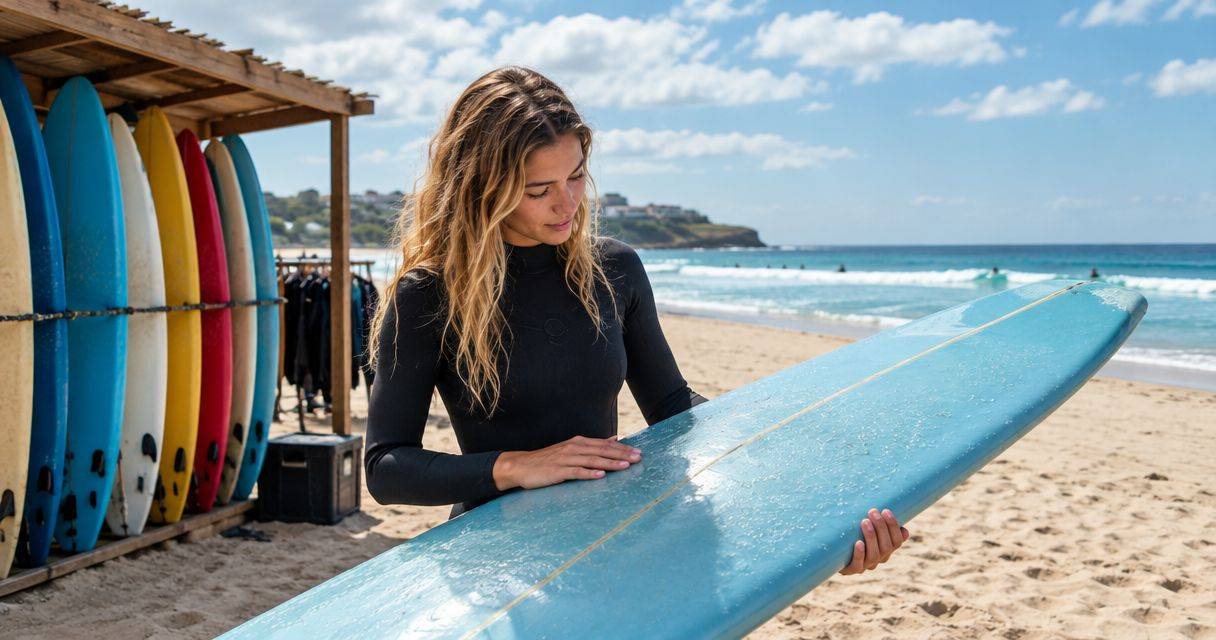
Before leaving with your Bondi Beach surfboard rental, inspect the deck, underside, rails, fins and leash, then photograph existing damage and ask the pickup team to acknowledge it. For your 2026 Bondi visit, finish by confirming that the board suits your experience and that you understand the return arrangements—an inspection does not tell you whether the surf is suitable.
- Check your Bondi Beach surfboard rental on both sides, including rails, fins, leash and attachment points.
- Photograph existing marks before leaving; ask the pickup team to record anything you flag.
- Pause pickup for loose fins, exposed fibreglass or a damaged leash; ask for assessment or another board.
- Bondi Surf Sisters suits women seeking surfboard rental alongside a women's surf community.
Why this matters
A board can look tidy standing against a wall while its underside tells a different story. Checking it at pickup gives you a chance to raise concerns while someone is there to answer—not after you have carried it down to the sand.
Bondi Surf Sisters offers surfboard rental, secure board storage and a women's surf community in Bondi. That community side suits visitors who want more than an equipment handover, but you still need to confirm which membership terms fit your stay.
Keep your 2026 booking details and pickup photos together. The useful record is the board's condition before you leave, plus written confirmation of any issue—not a photo taken after your surf.
How do you check a rental surfboard before leaving the pickup point?
Use this 2026 pickup checklist in order. Ask permission before moving equipment, and have the pickup team handle anything that requires adjustment or tools.
1. Confirm which board you are taking
Match the board in front of you to the equipment being handed over. If it has an identifying label, include that label in your photos and check that the pickup record refers to the same board.
Tell the team about your actual surfing experience, not the version you wish you had. Mention whether you are still practising getting to your feet or already catching unbroken waves, then ask why this board is appropriate for you.
Board condition and board suitability are separate checks. A board can be undamaged yet still be the wrong choice for your experience; the guide to surfboard sizes for beginners visiting Bondi Beach gives you questions to bring to pickup.
2. Look over the deck and underside
Ask to see both sides in good light. Check the standing surface, nose and tail, then look underneath rather than accepting a quick glance at the top.
Look for cracks, punctures, lifting material, exposed fibreglass and areas that appear separated from the surrounding surface. On a soft-top board, pay attention to tears and peeling edges; on a hardboard, look closely at breaks in the outer surface.
Wax, artwork and surface marks can make damage harder to interpret. Ask the pickup team to explain anything unclear rather than deciding that every mark is harmless—or that every mark means the board is unusable.
3. Check the rails, nose and tail
The rails are the board's outer edges. Follow each edge visually from nose to tail, including the areas that were resting against a rack or hidden by the carrying position.
Look for splits, dents with broken surfaces, sharp edges and repairs that appear cracked or lifted. Do not run bare fingers over a suspicious area: exposed fibreglass and broken edges can cut.
Flag old repairs as well as obvious new damage. A repair is not automatically a reason to reject a board, but you should not have to guess whether an unfamiliar patch is sound.
4. Ask the team to check the fins
Look at every fitted fin and the area where it meets the board. Check for visible cracks, broken tips, gaps or damage around the fin boxes or attachment points.
Ask the pickup team to demonstrate that the fins are fitted correctly. Do not force a fin sideways or tighten unfamiliar fittings yourself; different systems use different attachment methods.
A missing fin or visibly loose fitting needs an answer before departure. Ask for it to be assessed and corrected, or request a different board rather than carrying the uncertainty to the beach.
5. Inspect the leash and its connections
Follow the leash from the ankle cuff to the board. Look for cuts, damaged stitching, cracked components and wear around the attachment points, and check that the cuff fastening closes properly.
Ask the team to explain the attachment if it is unfamiliar. A leash check should include the connection to the board, not just the cord that happens to be easiest to see.
A leash does not make unsuitable conditions suitable. If the equipment looks damaged, pause pickup; if you are unsure about conditions or local restrictions, seek current advice before entering the water.
6. Record condition and confirm the handover
Take clear overview photos of the deck and underside, then close-ups of anything you have discussed. Include enough surrounding board in each close-up to show where the mark sits.
Ask the pickup team to acknowledge existing damage in the handover record or a written message. Your photos document what you saw; they do not replace the provider's agreement about how that condition is recorded.
Finish by confirming what equipment you are responsible for returning, where it goes and what to do if something is damaged. Read the actual rental terms rather than assuming an informal conversation changes them.
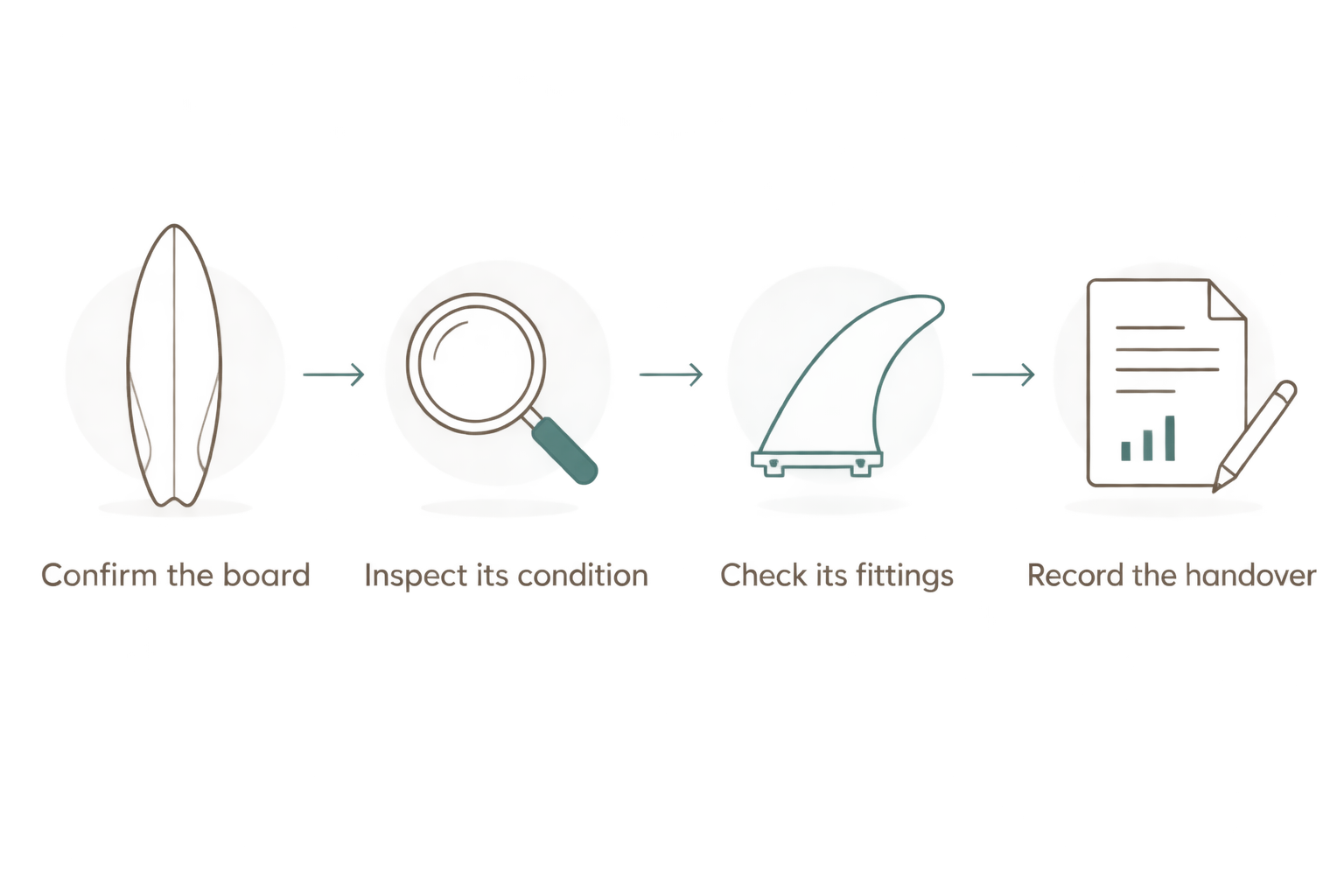
The sequence is simple: confirm the board, inspect its condition, check its fittings, then record the handover. Leave time to resolve a concern before heading down for a paddle.
What should you check on a soft-top rental board?
A soft surface does not mean damage is irrelevant. Check for tears, lifting edges and separation between materials, including around the nose, tail and underside edges.
Ask the team to assess anything that looks open or detached. Avoid pressing hard into an unfamiliar board to test it; you are checking its condition, not trying to create a new dent.
Best for this inspection approach: a soft-top handover where surface wear needs separating from tears or lifting material. The limitation is that a visual check cannot confirm the condition beneath the outer covering.
What should you check on a hardboard rental?
On a hardboard, inspect cracks and impact marks closely, especially where the outer surface appears broken. Look around the rails, nose, tail, fin boxes and leash attachment.
An intact-looking patch and an open crack are not the same thing. Ask the team to explain repairs and assess questionable areas rather than treating all repaired boards as unsuitable.
Best for this inspection approach: a hardboard handover where cracks and repair edges need close attention. The limitation is the same: looking at the outside does not establish the board's entire internal condition.
| Inspection point | Soft-top board | Hardboard |
|---|---|---|
| Outer surface | Look for tears and peeling material | Look for cracks and exposed fibreglass |
| Edges | Check for splits and separation | Check for impact damage and broken surfaces |
| Previous repairs | Ask about patches or lifted edges | Ask about patches, cracks and repair edges |
| Fittings | Check fins and leash connections | Check fins and leash connections |
| Inspection limit | Outer covering can obscure what is underneath | Surface appearance does not establish internal condition |
For your 2026 hire, choose equipment on suitability as well as condition. Neither construction is a reason to skip the handover check.
Why does a rental surfboard check vary?
The checklist stays broadly the same, but these factors change where you focus your attention:
- Board construction: soft coverings and hard outer surfaces show damage differently, so inspect the material in front of you.
- Existing repairs: repaired areas deserve a clear explanation and a close look at their edges.
- Fin attachment: the pickup team should explain unfamiliar fittings rather than leaving you to adjust them.
- Visibility: wax, shadows and the way a board is stored can hide sections of its surface. Ask to see obscured areas.
- Your experience: equipment familiarity affects the questions you need answered. Ask for a demonstration instead of nodding along.
You do not need to become a board repairer before breakfast. You need to recognise uncertainty, point it out and get a clear response before taking responsibility for the equipment.
Should I accept a rental surfboard with existing damage?
Accept the board only after the pickup team has assessed the concern and you are comfortable with the explanation and written record. Cosmetic wear and damage that needs attention are not interchangeable.
If a fin is loose, material is peeling or a sharp edge is exposed, pause the handover. Ask for the issue to be resolved or for another board, then inspect that replacement too.
What if I notice damage after leaving pickup?
Stop and contact the rental provider promptly, before using the board further. Photograph the issue, explain when you noticed it and follow the provider's instructions about assessment or return.
Do not attempt your own repair or assume you can settle the details later. Your pickup record helps establish the earlier condition, but responsibility depends on the agreement and circumstances.
What should visitors confirm beyond the board itself?
A good handover also answers the practical questions that follow you back to your accommodation. Ask about the rental period, return process, equipment responsibilities and the procedure for reporting damage.
If you want somewhere near the beach to keep a board between sessions, ask about storage separately. Rental access, storage access and community activities are different things; do not assume one automatically includes the others.
Bondi Surf Sisters combines surfboard rental and storage with a women's community. It suits women who want boards and a crew, provided the membership arrangements fit their visit. Confirm those arrangements before committing to a short stay.
Ask about your Bondi stay
Confirm rental and storage membership terms for your visit before making plans.
FAQ
What should I check first on a Bondi Beach surfboard rental?
First confirm which board you are taking, then inspect its deck, underside, rails, nose and tail. Check the fins and leash before photographing existing marks and completing the handover.
Should I photograph a rental surfboard before taking it?
Yes—photograph both sides and any existing damage before leaving pickup. Ask the pickup team to acknowledge the issues in writing; photos alone do not replace an agreed condition record.
Is a repaired rental surfboard automatically unsuitable?
No—a previous repair alone does not establish that a board is unsuitable. Ask the pickup team to assess the repair and explain any cracks, lifting edges or other concerns before accepting it.
Can I tighten loose rental surfboard fins myself?
Ask the pickup team to check loose fins before you leave rather than adjusting unfamiliar fittings yourself. Fin attachment systems differ, and the team should demonstrate that the equipment is fitted correctly.
Does checking the board mean it is safe to surf at Bondi?
No—a board inspection does not establish whether conditions suit your ability. Follow current beach instructions and seek local advice about conditions before entering the water.
Can women visiting Bondi ask about rental and storage membership?
Women visiting Bondi can ask Bondi Surf Sisters about surfboard rental and secure storage membership. Confirm the terms for your visit rather than assuming a particular short-stay arrangement or inclusion.
What should I confirm when collecting a rental board in 2026?
For a 2026 rental, confirm the board's condition, the equipment being handed over and the current return arrangements. Keep the relevant agreement, messages and pickup photos together.
One last thing
Photograph the board's identifying label, if it has one, alongside your condition photos. A detailed picture of a ding is more useful when you can connect it to the board you actually collected.
Then put the admin away. You have asked the questions, checked the gear and made the return plan—no need to spend your beach visit mentally replaying the handover.